



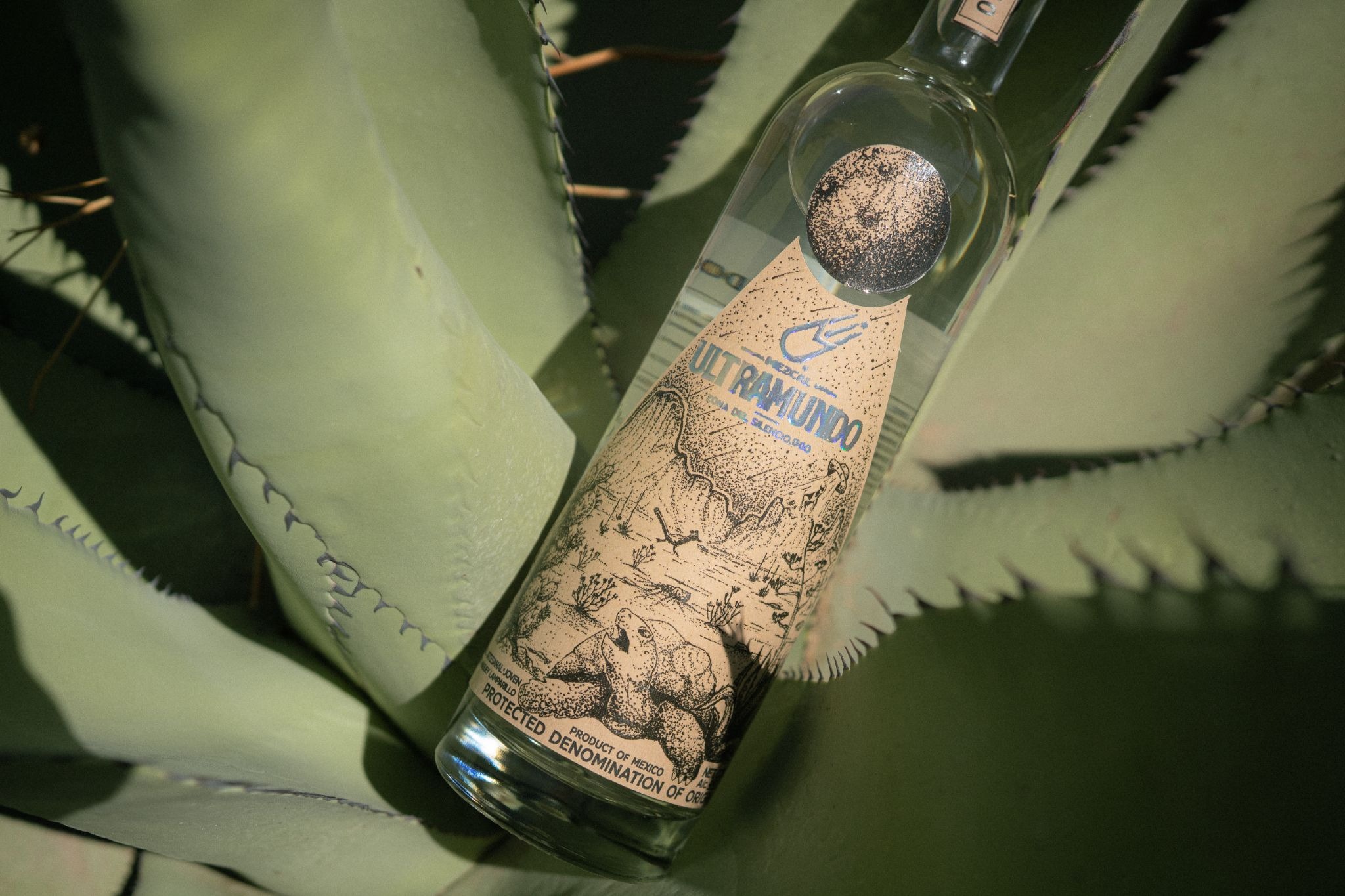
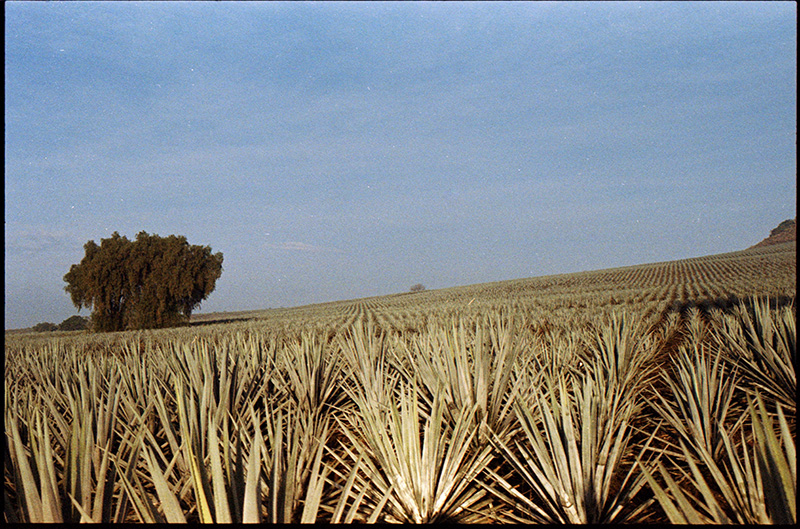
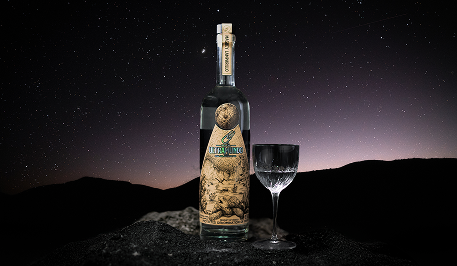
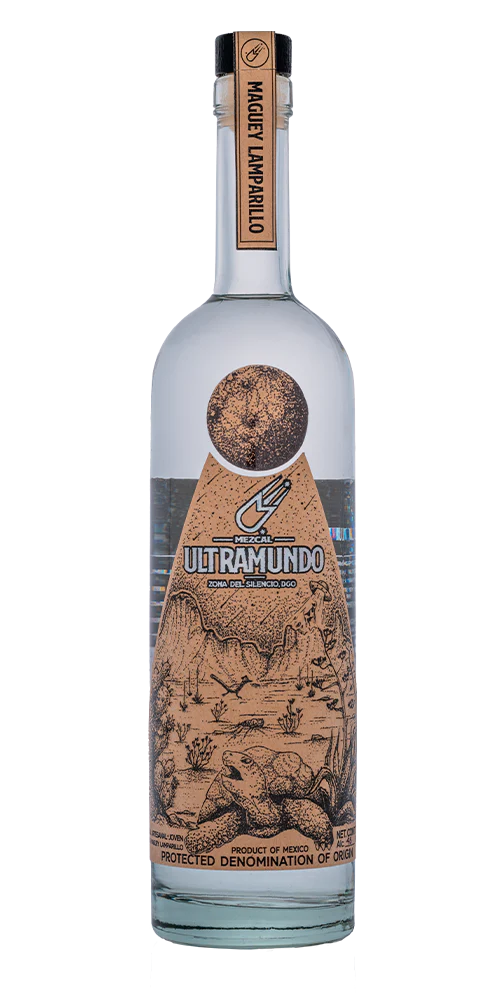
Agave asperrima, locally known as Lamparillo, is a rare and treasured agave expression, popular for its herbaceous, chili, and mineral notes when distilled. Ultramundo is one of the only brands sharing this unusual mezcal, which they make from agave harvested at Rancho Pelayo.
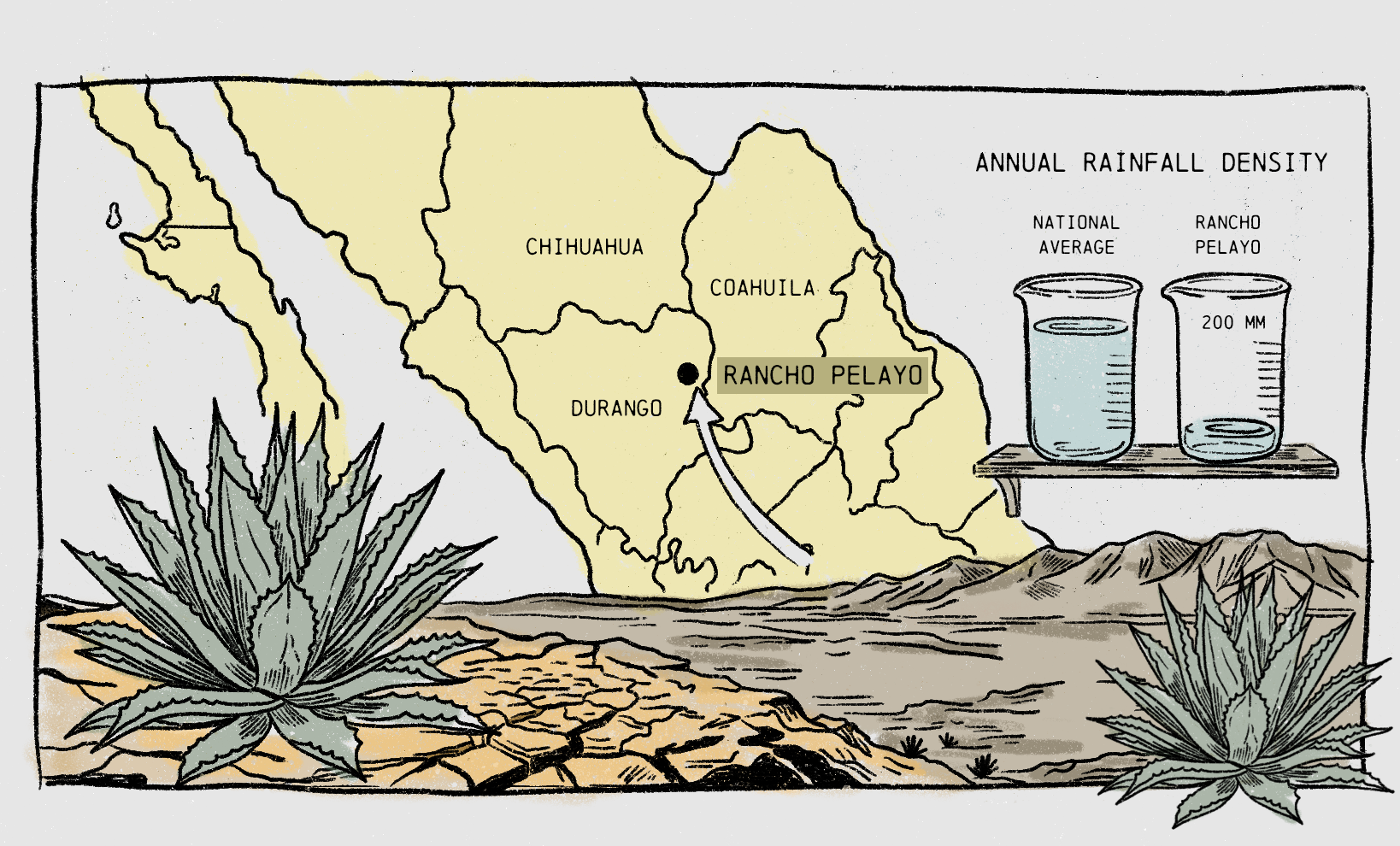
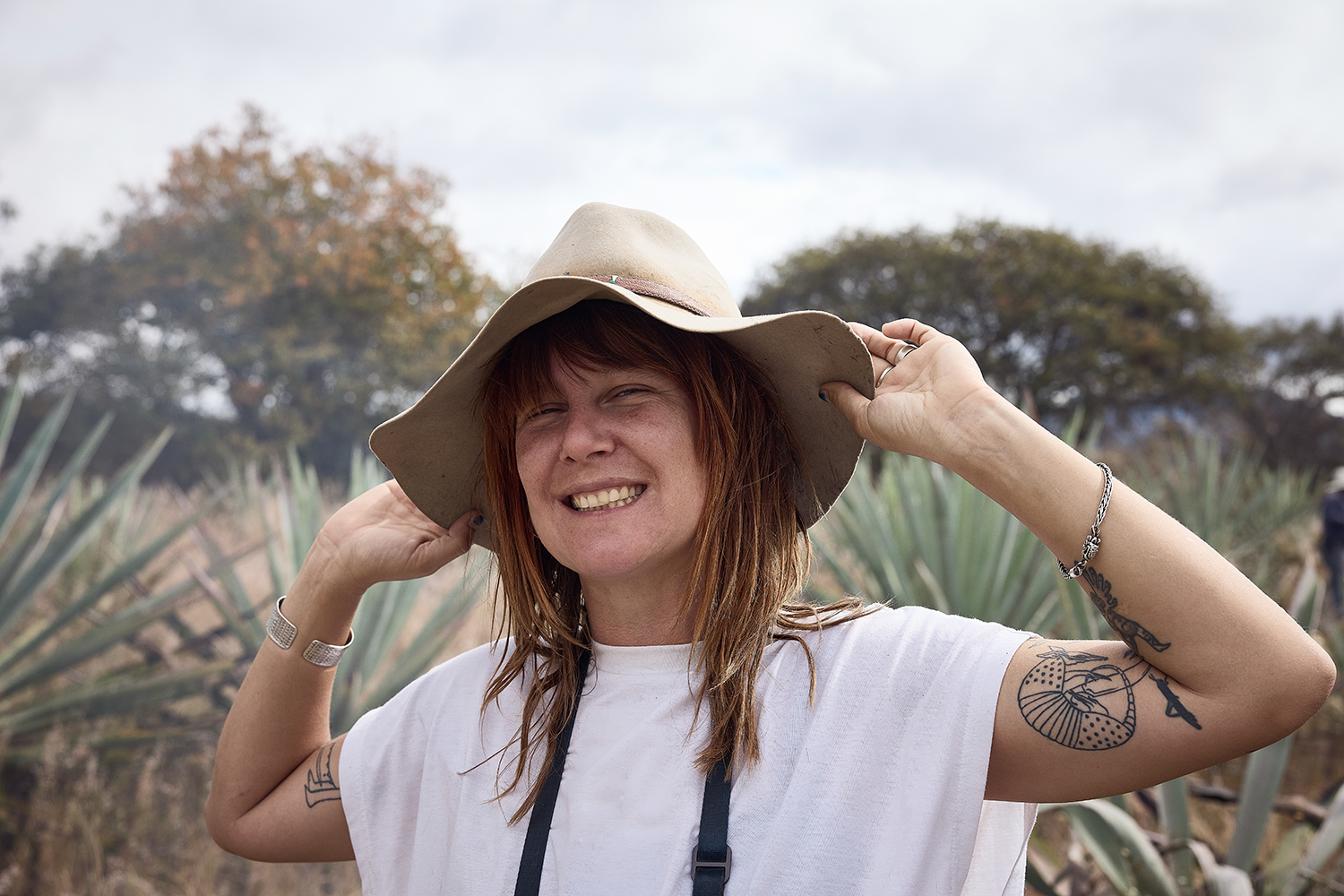
Ultramundo founder, Sergio Garnier, says Lamparillo is the only agave known to be endemic to the region. It is uniquely suited to the Pelayo’s arid plains, which stretch across the mountains of Mapimí in the Zone of Silence. This is a beautiful, otherworldly region of the Chihuahuan desert, encompassing Coahuila, Durango, and Chihuahua.
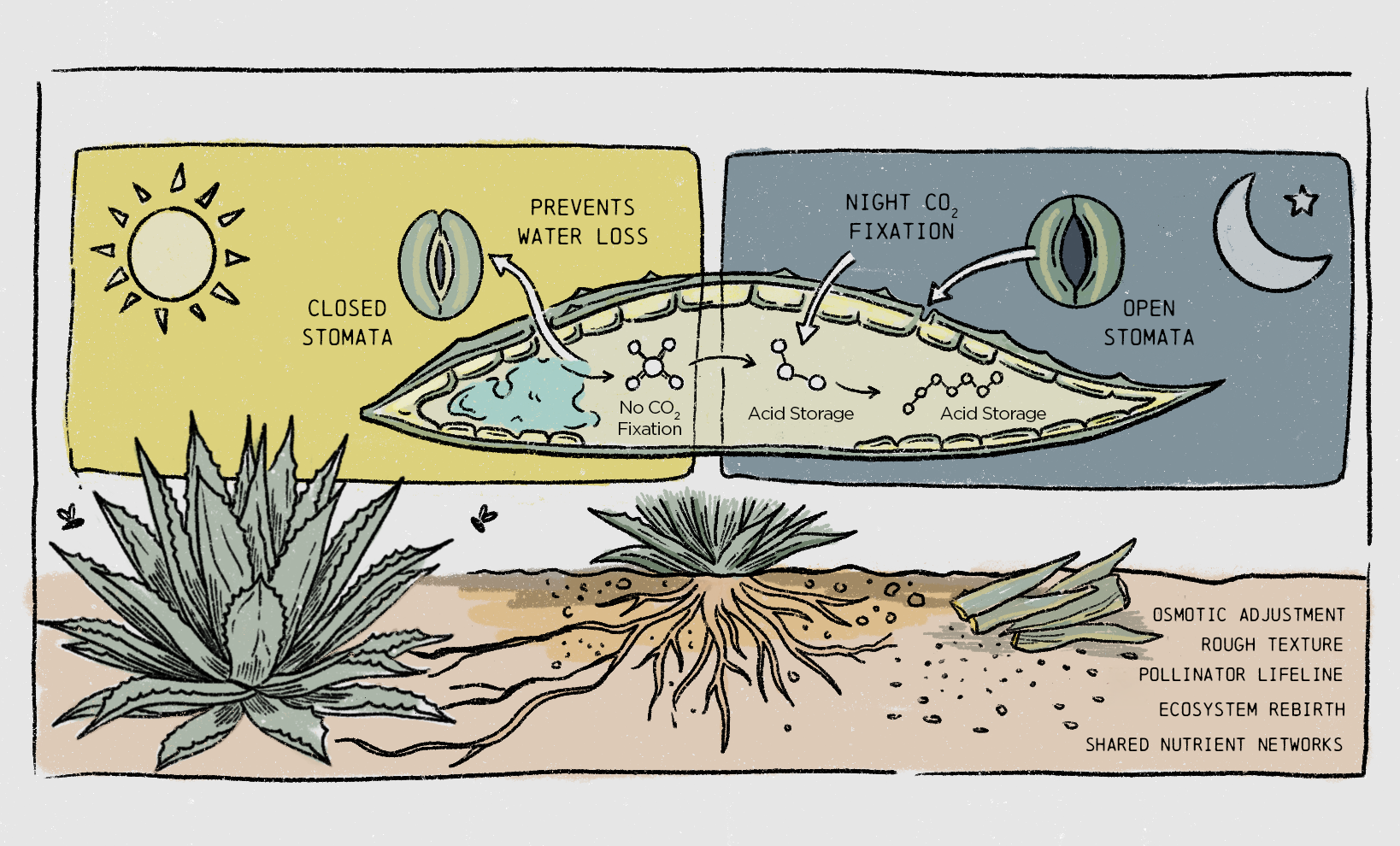
To survive extreme drought, agave utilizes Crassulacean Acid Metabolism (CAM), closing its stomata during the day to prevent water loss and fixing CO2 at night. Additionally, it uses Osmotic Adjustment (OA) to lower its internal water potential, allowing it to absorb moisture from dry soil and maintain cell turgor.
At Rancho Pelayo, they have 200 millimeters of rainfall (or less) per year, which is considered desert or semi-desert. But then there are monsoons. According to Sergio, “we're talking about 25% of the average annual rainfall falling in a single night.” I learned this the hard way when I stayed there, leaving the sunroof on the car open during one of the few rainy days of the year!
When flash floods occur, they erode the soil, creating deep scars in the landscape. Fortunately, Sergio has found that the roots of Lamparillo maintain soil structure by anchoring it in place. The plants act as islands that retain topsoil, creating the necessary conditions for ‘living soil’ rich in organic matter and microorganisms to develop.
All agaves are resilient. However, a key characteristic of Lamparillo, aside from being able to tolerate droughts, is its ability to withstand sub-zero temperatures. Sergio describes this capacity as its “superpower.” Another unusual attribute is that the penca opens and closes, “forming a small channel when it's dry, trying to capture more water. When it rains, and the weather improves, it opens a little more.”
The name asperrima is derived from the word aspés or áspero, referring to the rough, sandpaper-like texture of its leaves. Sergio says: “It's the only agave I've seen with this characteristic. I don't know if it's something it has developed or if it provides greater protection against rodents or other pests.”
Lamparillo is highly prone to producing clones and pups from its rhizomes, often forming clusters rather than growing as single plants. Sergio sees this as another survival mechanism, believing that there is “an exchange of nutrients between the mother plant and these other clones, rhizomes, and pups that develop.”
During its flowering stage, the agave provides a strategic food source for pollinators, including bees, hummingbirds, and migratory bats. Even after the plant dies, its dried stalks serve as nesting sites for woodpeckers and eventually return organic matter to the ground. “Ultimately, it's organic matter that falls to the ground, creating a virtuous cycle.”
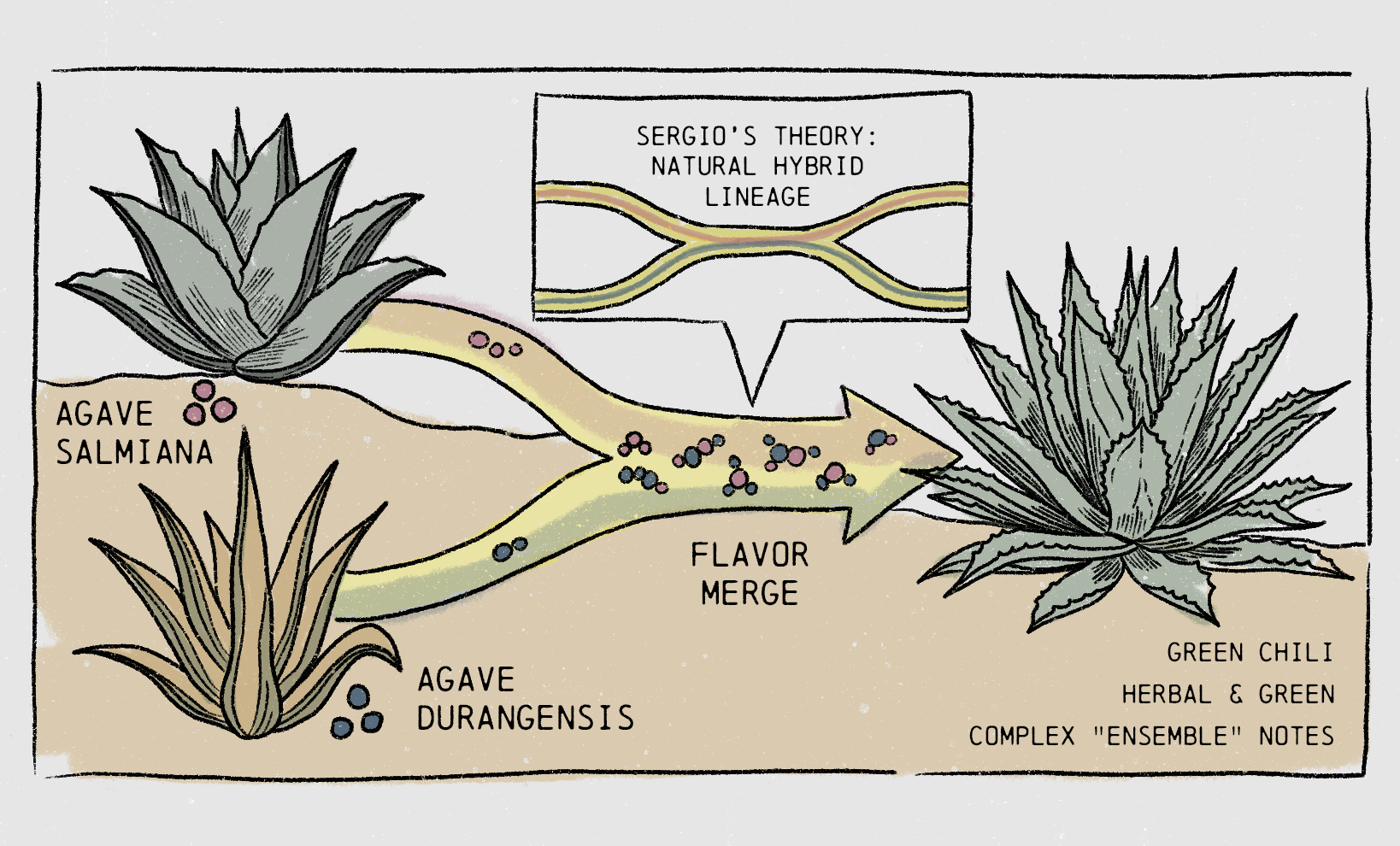
Sergio says that the flavor comes from a combination of the environment and the agave that adapted to it. “It tastes like an ensemble because you have so many notes.” His theory is that Lamparillo is a derivative of a super-resistant hybrid that came from Salmiana and Durangensis, due to its morphological characteristics, even its flavors. “Sometimes it tastes to me like a blend of these two.”
He explains that the challenging conditions faced by the Lamparillo result in a piña with low sugar levels, which is why the yield is so low. However, these sugar levels in the plant's piña make the subsequent fermentation and final distillation more complex. More pectin complicates the process because it tends to generate higher levels of methanol. “The Lamparillo plants growing in a better climate, which has more rain, taste very different.”
“Another thing I found very interesting is that it's very rare for a distillate to taste like the raw plant. When we're cutting the piñas, this green chili note, this very aromatic, green, herbal note, is what predominates as we're cutting them. And when the piñas are raw, this flavor persists until the final result, after four days of cooking, fermentation, and double distillation, those organoleptic, specifically aromatic, notes remain. So I think that speaks to a very, very resilient character and spirit.”
This article was structured with the assistance of artificial intelligence (ChatGPT). All content is based on human input and editorial oversight. For more details on how PKGD integrates AI responsibly, please refer to our AI Policy.
At PKGD, we continue investing in brand-led storytelling, creating work designed not only to perform, but to build long-term brand equity.
This article was structured with the assistance of artificial intelligence (ChatGPT). All content is based on human input and editorial oversight. For more details on how PKGD integrates AI responsibly, please refer to our AI Policy.


Four producers reveal what cannot be sacrificed if a spirit is to remain fully itself.
The way we learn to drink tequila can shape what we notice in the glass, and what habit trains us to ignore.
Cheap agave does not erase cost; it delays it, until neglected fields turn a price collapse into an agricultural risk.
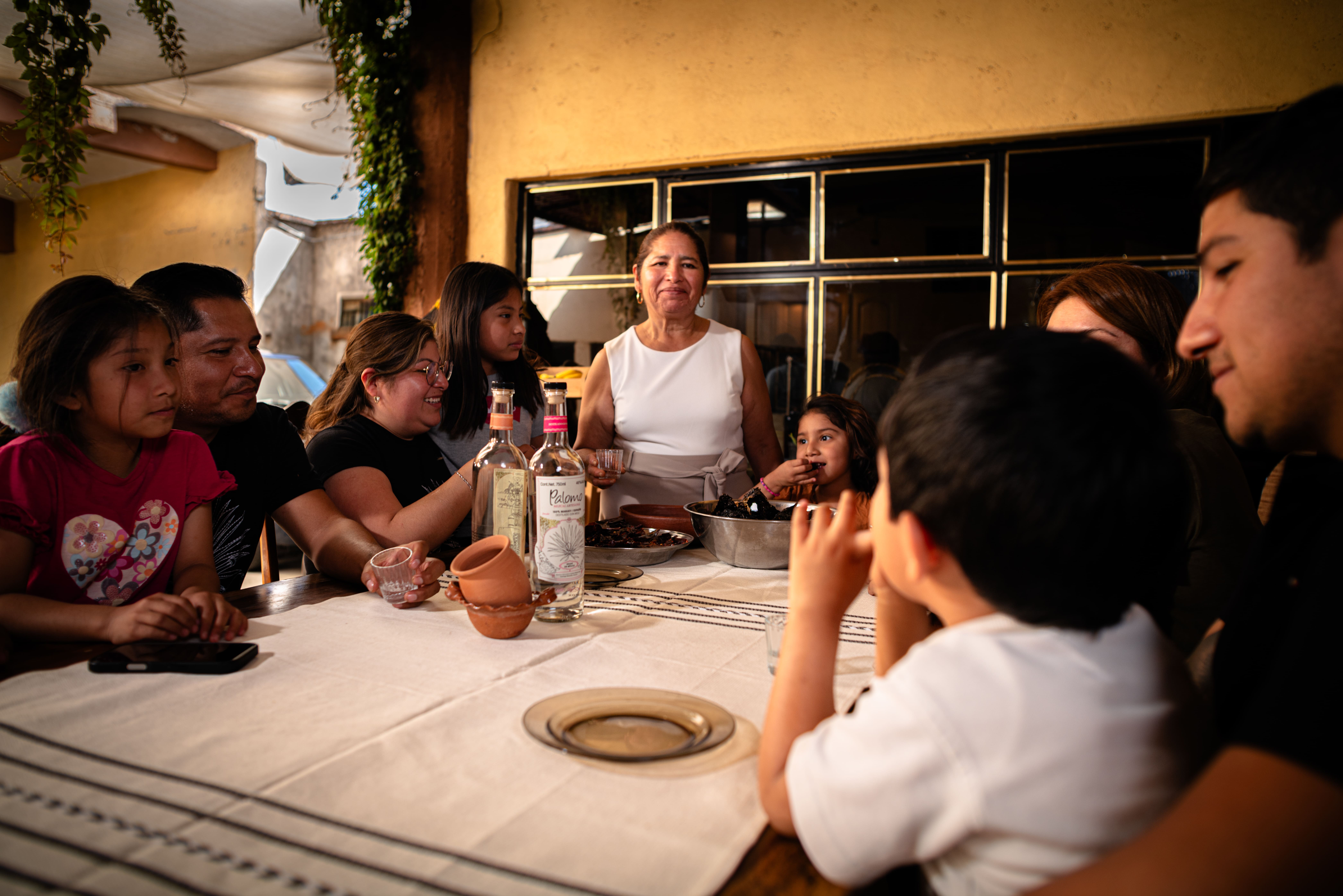
Buying the symbol is celebration; real support begins when the bottle stays connected to its maker.
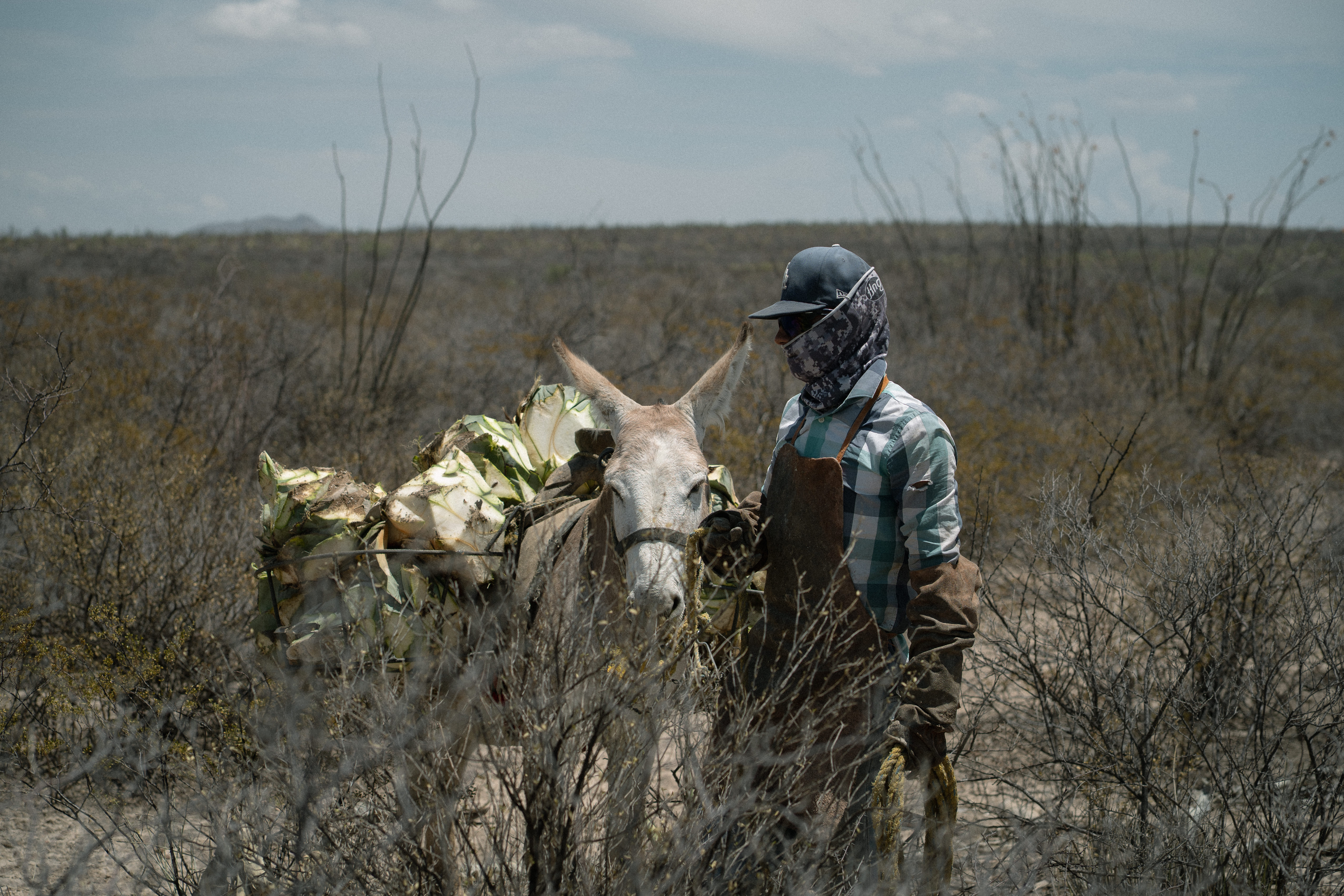
Agave spirits carry more than flavor: they hold memory, land, and forms of resistance against erasure.
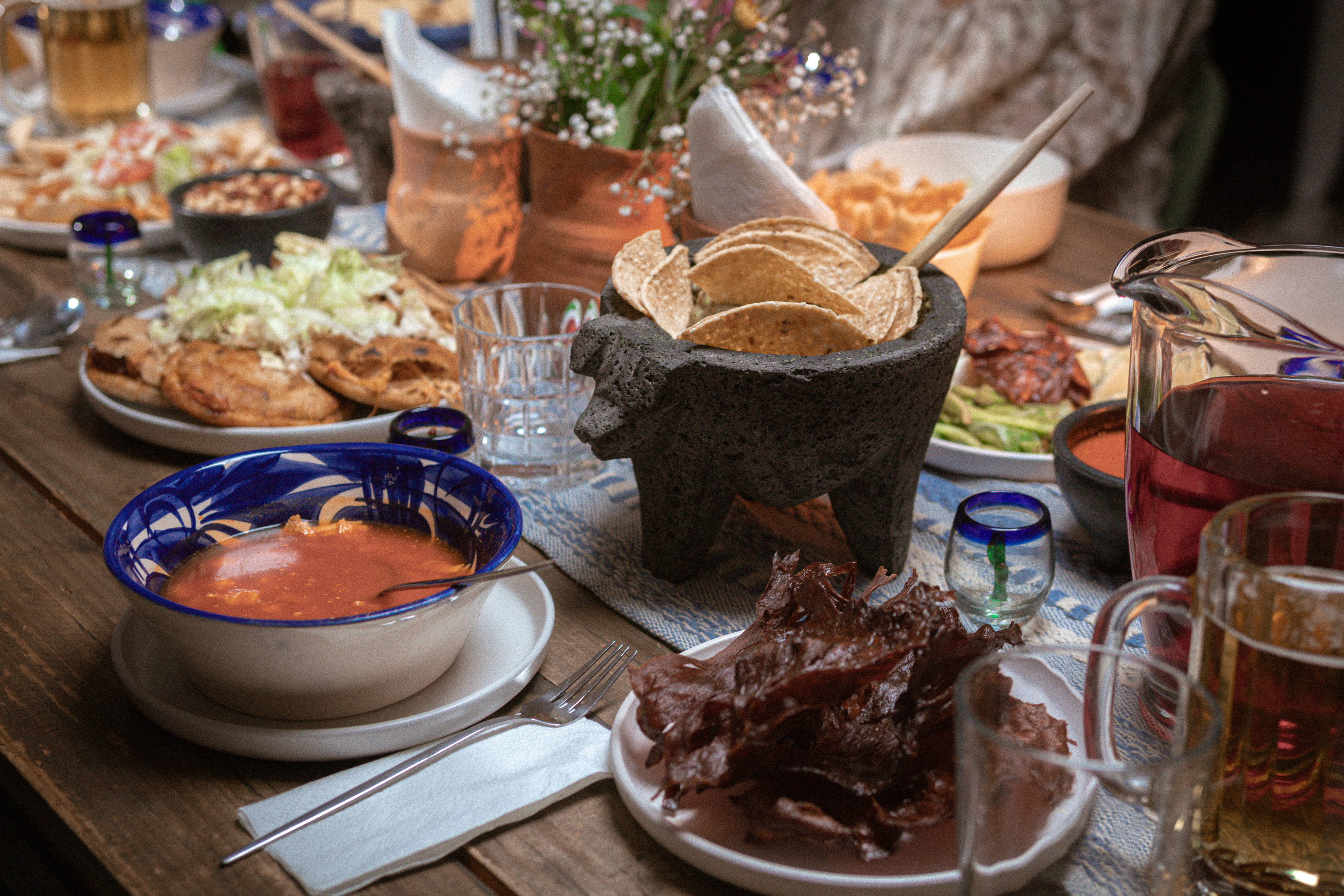
In a month crowded with symbols, representing Mexico responsibly means preserving context, limits, and the living truth behind what becomes visible.

By accessing and using PKGD´s website, you agree to the cookie policy outlined in our privacy notice.
By accessing and using PKGD´s website, you agree to the cookie policy outlined in our privacy notice.


























Leave a reply
Lorem ipsum dolor sit amet, consectetur adipiscing elit. Suspendisse varius enim in eros elementum tristique. Duis cursus, mi quis viverra.
Lorem ipsum dolor sit amet, consectetur adipiscing elit. Suspendisse varius enim in eros elementum tristique. Duis cursus, mi quis viverra.