





%206.png)


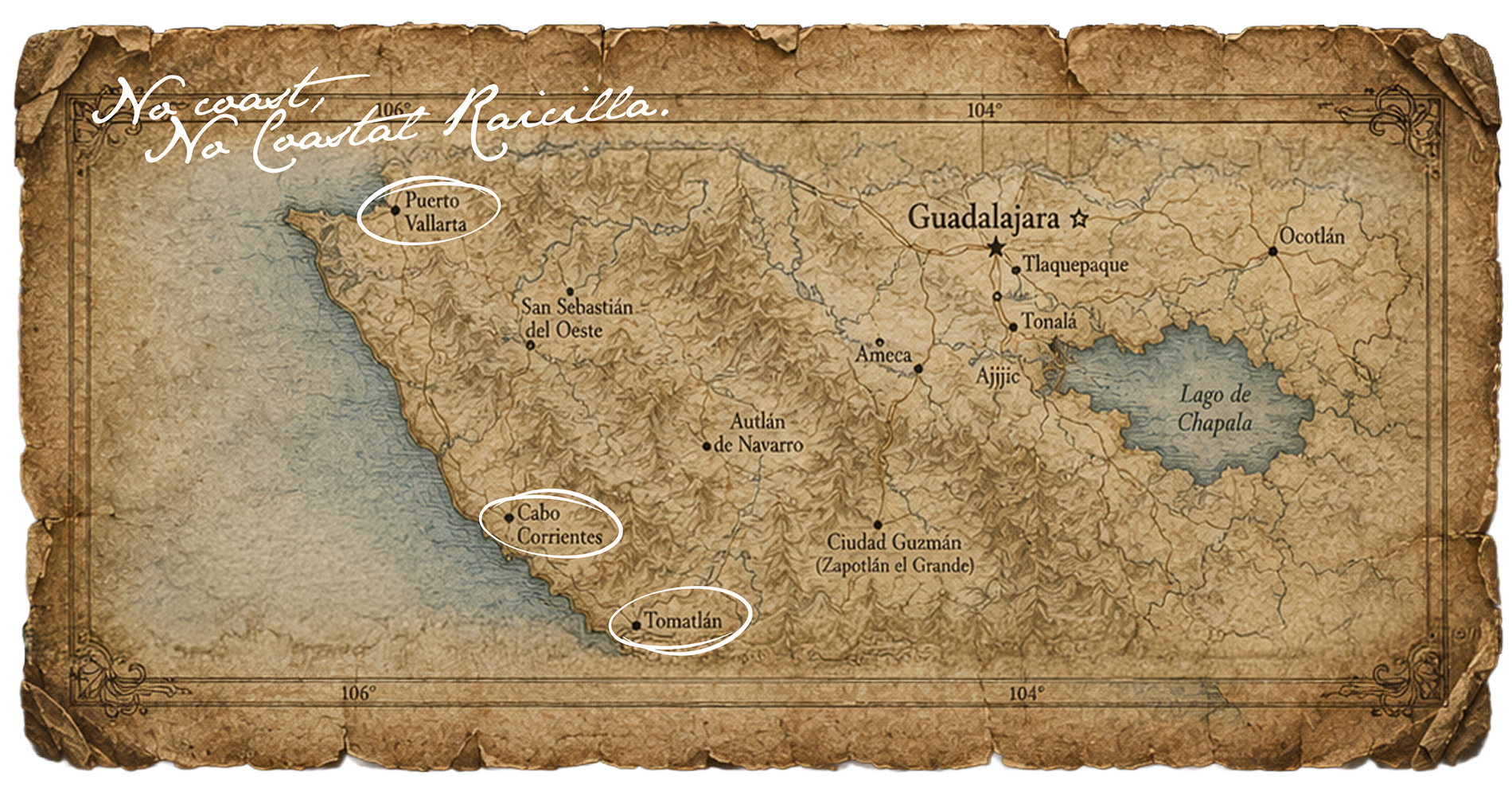
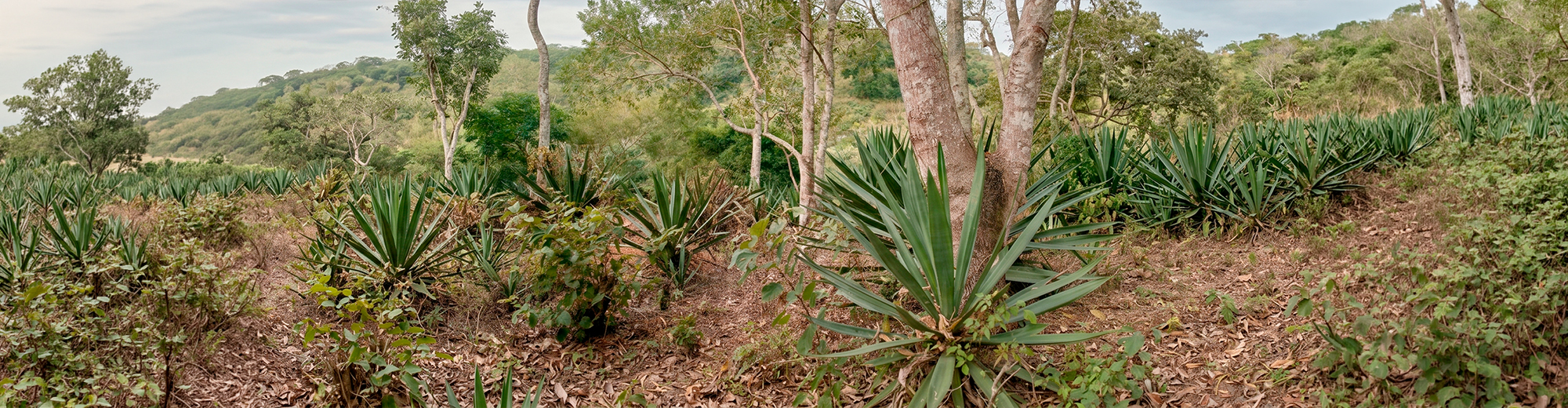
According to the Denomination of Origin, true Coastal Raicilla can only be produced in the municipalities of Puerto Vallarta, Cabo Corrientes, and Tomatlán, along the Pacific coast of Jalisco. This protected designation preserves the region’s unique traditions, methods, and terroir.
%206.png)
It’s one of the most widely used agave species in western Mexico and the foundation of many traditional raicillas. Known for its adaptability and rich sugar content, it produces spirits with bright citrus notes, fresh herbs and subtle floral aromas.
.png)
It’s one of the most widely used agave species in western Mexico and the foundation of many traditional raicillas. Known for its adaptability and rich sugar content, it produces spirits with bright citrus notes, fresh herbs and subtle floral aromas.

It’s a wild agave species prized for its bold character and complexity. It typically produces spirits with vibrant herbal notes, ripe tropical fruit, citrus zest, and a pronounced minerality, resulting in a rich and expressive profile.
It’s a wild agave species prized for its bold character and complexity. It typically produces spirits with vibrant herbal notes, ripe tropical fruit, citrus zest, and a pronounced minerality, resulting in a rich and expressive profile.
%201.png)
Coastal agave harvesting is especially challenging. Agaves often grow on steep, rugged terrain, and harvested piñas may be carried by donkeys for up to 30 minutes before reaching the nearest point accessible by truck.
The agave is cooked in a traditional conical oven built from volcanic stone. Once loaded, the pit is covered with earth and palm leaves, allowing the agave to slowly roast for 3 to 4 days.
The milling is done by hand using a wooden canoe and mallet. Larger, tougher pieces are further broken down with a machete, making it one of the most traditional and labor-intensive steps of the process.
Distillation follows the traditional Filipino-style method. These handmade stills, known as “los viejos” are crafted from hollowed logs, agave fibers, and bagazo. Their artisanal construction creates a more complex and distinctive spirit.




By accessing and using PKGD´s website, you agree to the cookie policy outlined in our privacy notice.
By accessing and using PKGD´s website, you agree to the cookie policy outlined in our privacy notice.