



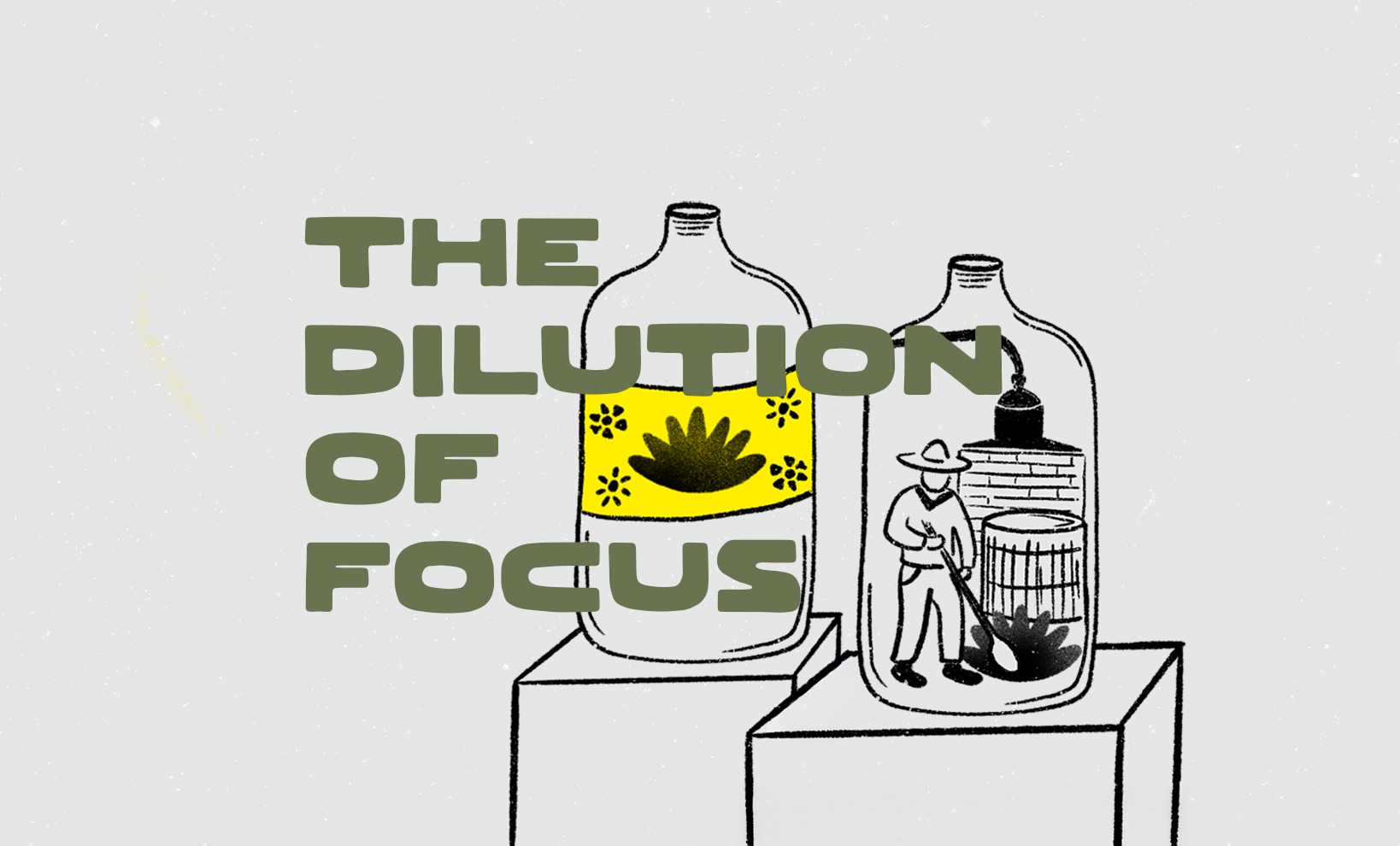
For years, the tequila category operated inside a powerful cycle of visibility and momentum.
Celebrity brands exploded. New labels flooded the market. Enthusiast culture accelerated online. Scarcity became marketing strategy. Consumers chased special releases, limited drops, and the next exciting discovery.
For a long time, almost everyone benefited from the expansion.
But over the last decade, working inside the agave spirits business across Mexico and the United States, I began noticing a growing disconnect between the stories being told about tequila and the structural reality underneath many brands.
Sometimes the gap was subtle. Sometimes it was enormous.
In several cases, I was physically present at distilleries helping select products for contract brands because the brand owners themselves were not there and often had little interest in deeply participating in the process. Later, I watched those same brands publicly describe painstaking involvement in shaping every detail of the liquid.
That disconnect stayed with me.
Not because contract production itself is inherently wrong. Many producers benefit from outside production. It creates jobs, generates revenue, and can provide important operational stability.
But over time, these examples stopped feeling isolated. The same patterns kept appearing repeatedly from different directions across the category.
The tequila conversation increasingly centered around narrative, novelty, scarcity, and momentum while drifting further away from questions of ownership, operational alignment, producer control, and long-term sustainability.
At the same time, another pattern became impossible to ignore.
Consumers who genuinely wanted to support great producers often unintentionally fragmented the long-term value of those producers by endlessly chasing small contract brands tied to famous distilleries. Every new release generated excitement. Every limited project created noise. But very little of that energy consistently reinforced the producer’s own long-term brand equity.
That distinction matters.
There is a major difference between participating in production revenue and building enduring brand value that compounds across generations.
Many consumers understandably assume that if a producer is involved, the producer is automatically capturing the long-term upside of category growth. But production revenue and enduring equity are not the same thing.
One of the least discussed pressures in tequila is not production capacity. It is producer attention.
Squeaky wheels get the grease.
The loudest outside partners often demand disproportionate focus, while the producer’s own house brand can slowly lose strategic attention inside the very facility that built its reputation in the first place.
The producers who appear best positioned for long-term durability understand this deeply. Distilleries and producers associated with brands like Siete Leguas, Tequila Fortaleza, and Tapatío Tequila have maintained strong alignment between producer identity and house-brand focus even while operating inside a rapidly expanding category.
That does not mean every successful brand follows the same model. In fact, some of the fastest growing brands in tequila today demonstrate the opposite.
Brands like 818 Tequila and Teremana Tequila have shown that accessibility, familiarity, celebrity visibility, and approachable pricing can scale extremely effectively in a mature market. That reality matters, especially because enthusiast conversation often creates the illusion that endless premium escalation and scarcity-driven demand are permanent conditions.
I do not believe they are.
Consumers have finite budgets, finite attention, and infinite alternatives competing for their discretionary spending. Their choices are not limited to tequila or even agave spirits. They can choose bourbon, wine, beer, RTDs, restaurants, travel, moderation, or countless other experiences.
At the same time, the online tequila conversation is often dominated by collectors, influencers, and enthusiasts whose purchasing behavior does not fully reflect the broader market. As Jay Baer’s “Tequila Seeker” research has shown, even highly engaged tequila enthusiasts own an average of only four bottles at home.
That reality changes how sustainable the current wave of ultra-premium positioning and special-release culture may actually be.
The market does not always reward what is structurally healthiest for producers. Commercial success and structural alignment are not always the same thing.
Some brands develop significant visibility and momentum long before the market has fully tested their long-term durability under pressure.
Over time, these recurring observations stopped feeling like disconnected frustrations and started looking more like a structural pattern inside a maturing category.
That realization eventually led us to begin organizing these ideas into a framework.
Not a purity test. Not a declaration of who makes “good” tequila. And not an attempt to reduce a complex category into simplistic binaries.
Instead, the framework asked a different set of questions:
Those questions eventually became the foundation for the PKGD White Paper: Built Right. Brought Right.
The purpose of the framework is not to claim that every successful brand will fit neatly inside it. Clearly, some will not.
The purpose is to articulate the structural questions that increasingly matter as tequila transitions from a category driven primarily by expansion and visibility into one increasingly shaped by pressure, competition, maturity, and long-term sustainability.
Because the next era of tequila will not be defined only by who became visible first. It will be defined by which brands were built to endure.
This article was structured with the assistance of artificial intelligence (ChatGPT). All content is based on human input and editorial oversight. For more details on how PKGD integrates AI responsibly, please refer to our AI Policy.
This article was structured with the assistance of artificial intelligence (ChatGPT). All content is based on human input and editorial oversight. For more details on how PKGD integrates AI responsibly, please refer to our AI Policy.
At PKGD, we continue investing in brand-led storytelling, creating work designed not only to perform, but to build long-term brand equity.

By accessing and using PKGD´s website, you agree to the cookie policy outlined in our privacy notice.
By accessing and using PKGD´s website, you agree to the cookie policy outlined in our privacy notice.
























Leave a reply
Lorem ipsum dolor sit amet, consectetur adipiscing elit. Suspendisse varius enim in eros elementum tristique. Duis cursus, mi quis viverra.
Lorem ipsum dolor sit amet, consectetur adipiscing elit. Suspendisse varius enim in eros elementum tristique. Duis cursus, mi quis viverra.