



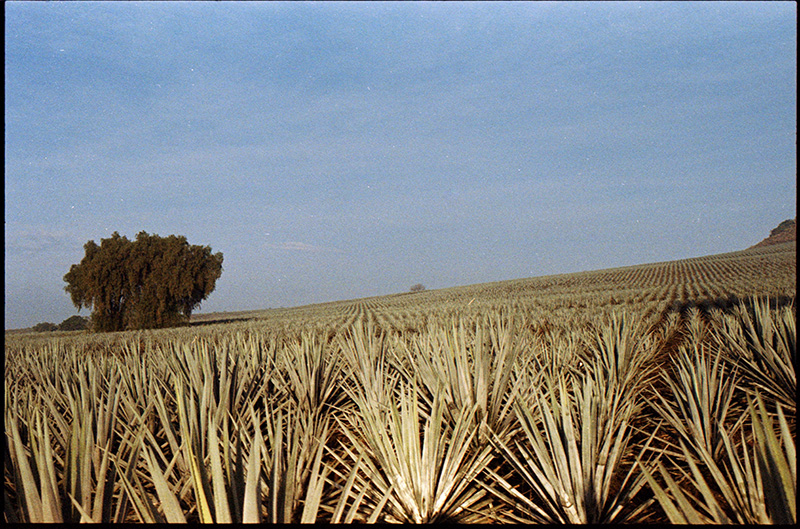
The collapse in agave prices is often described as a market correction. In one sense, it is. After years of aggressive planting and expansion, Mexico’s tequila sector is now facing a severe oversupply of blue agave and the resulting downward pressure that was always foreseeable.
But that description is too superficial for what is happening in the field.
This is not just a story about falling prices. It is a story about what happens when a crop that takes years to mature is forced to absorb the shock of a market that can change within months. The real risk begins when agave prices fall far enough that maintaining the field no longer makes economic sense.
That is the point at which a pricing problem becomes an agricultural problem.
The dimensions of the current imbalance are no longer minor. According to figures from the Consejo Regulador del Tequila cited by EFE, there are currently around 1.704 billion Agave tequilana Weber plants distributed across 511,492 hectares within the Tequila Denomination of Origin. Available supply is estimated at approximately 3.5 times current industry needs.
That surplus has caused a sharp drop in prices paid to growers. After rising above MXN $30 per kilogram in recent years, prices reported by EFE for March 2026 ranged from MXN $0.80 to MXN $8 per kilogram for growers registered in the CRT’s Agave Responsable Social (ARS) program.
Within a conventional market narrative, lower prices suggest correction, adjustment, even efficiency. In agriculture, the meaning is more complicated. Agave does not respond to price signals on the same time horizon as the market built around it. Planting decisions remain physically present in the landscape for years.
The market can adjust. The plant cannot do so at the same pace.
For growers, the crisis is not measured first in abstract terms of supply and demand. It is measured by whether a field can still be maintained.
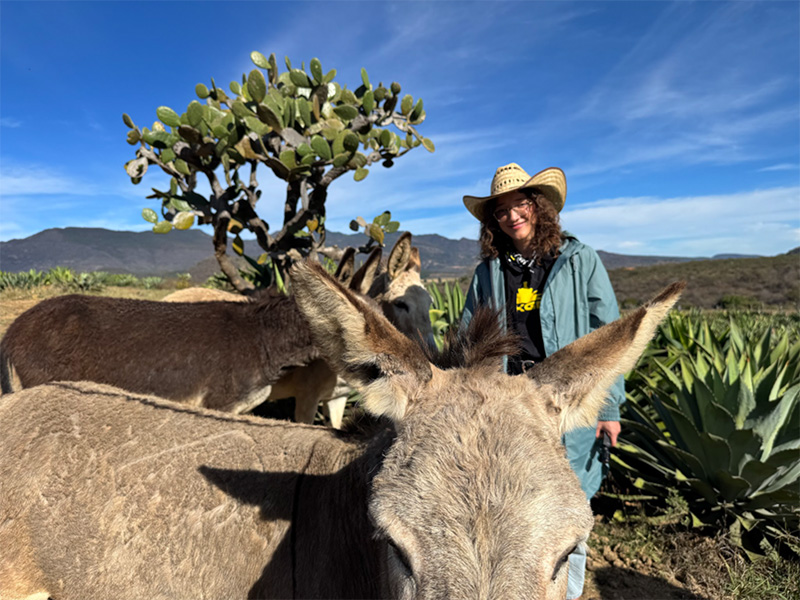
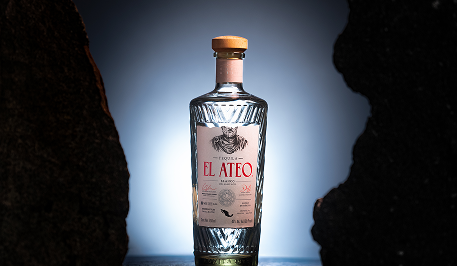
In an interview conducted on August 20, 2026, Luis Ángel Villalobos, an agave grower in Romita, Guanajuato, and co-owner of El Ateo, described the shift in stark terms: the price he was receiving fell from MXN $28 per kilogram in 2023 to MXN $5 per kilogram today, delivered to the distillery. Establishing one hectare of agave in the first year, he explained, costs around MXN $200,000, including compost and planting. In subsequent years, annual maintenance still amounts to approximately MXN $80,000 per hectare.
Under those conditions, he estimated that maintaining a planting stops being economically viable at around MXN $7 per kilogram.
That threshold matters because the consequences of low prices do not begin at harvest. They begin earlier, when growers stop investing in the tasks that keep the land stable. According to Villalobos, roughly 80% of the plantings established after 2023 in his area are now being abandoned.
The first task to disappear is routine field clearing. From there, the field begins to change: weeds accumulate, fire risk rises, frost damage becomes more destructive, and the surrounding agricultural environment becomes harder to manage.
Cheap agave is only cheap if the cost of keeping the field alive is ignored.
An abandoned agave field does not automatically become a phytosanitary hotspot overnight. But it does become harder to monitor, clean, and protect.
That distinction matters. The problem is not that every neglected plot immediately turns into a biological crisis. It is that the absence of routine maintenance can weaken early detection and containment capacity precisely when the system can least afford it.
In regions dominated by large-scale monocultures of the same crop, that vulnerability rarely remains isolated. Pests and diseases do not respect the legal boundaries between neighboring plots. The biological security of one field is partly determined by what happens in the next one.
This broader concern has already been recognized publicly. During the commemoration of National Tequila Day on July 24, 2026, CRT president Aurelio López Rocha warned that low prices were causing fields to be abandoned and that pests could migrate from neglected plots into those kept in good condition.
Among the known threats to agave is the agave snout weevil (Scyphophorus acupunctatus), along with various fungal and bacterial pathogens. At field level, Villalobos described a similar pattern from his practical experience. In his experience, abandonment and reduced maintenance have coincided with greater insect pressure, including white grubs and agave borers.
These observations are presented as field experience, not as evidence of a generalized outbreak in the region. Villalobos also identified early monitoring, integrated pest management, and pheromone traps as some of the most appropriate tools currently available to protect the health of agave plantings.
The crisis, then, is not simply that agave has become cheap. It is that the economic basis for caring for the crop is beginning to erode.
The current oversupply was not created when prices fell. It was created when planting increased.
That may sound obvious, but it is essential to understanding why the current downturn cannot be resolved simply by waiting for the market to recover or by trusting that higher sales will absorb the problem quickly enough. Agave is not an asset that can be unwound at will. By the time excess supply becomes visible in the price per kilogram, the biological commitment has already been made.
This is where a public policy perspective becomes useful. Yani Limberopulos, Director of Planning and Project Development at Jalisco’s Agency for Co-Investment for Sustainable Development, described the current crisis as part of a longer pattern of instability within the agave-tequila supply chain.
From a public policy perspective, and not as a crop specialist, he pointed not only to the recurring tension between growers and industrial buyers, but also to the speculative logic that followed previous price spikes.
According to Limberopulos, the appeal of high prices also drew in investors with little connection to the agricultural realities of the field. That dynamic helped turn a period of high prices into one of overinvestment.
Seen from that perspective, the current crisis is not just a downturn. It is the deferred result of a system that responds to short-term incentives with long-term biological consequences.
The industry’s immediate response to oversupply is understandable: sell more tequila, move more inventory, and absorb a greater share of the existing crop.
Commercially, that logic makes sense. Structurally, it remains incomplete.
Higher sales may relieve some of the pressure. They do not reverse the years of planting already built into the landscape, nor do they automatically restore the economic conditions needed to maintain neglected fields. A demand-side response may help manage the visible surplus. It does not resolve the underlying mismatch between the pace of the market and agricultural time.
The market can accelerate faster than the field can recover.
The current moment also exposes a difficult institutional limit. The CRT itself has acknowledged that it cannot directly control how much agave a private landowner chooses to plant. In a market economy, that limit is real.
But the absence of direct control does not eliminate the need for coordination.
Limberopulos argues that the CRT could still play a more active role by making supply conditions more transparent and issuing clearer public signals about planting pressure, available inventories, and long-term risks.
In practical terms, he suggested something like a traffic-light system: not a control structure, but an alert system capable of indicating when planting levels are entering a risk zone.
That would not amount to centralized planning, nor would it guarantee the disappearance of speculative planting. It would, however, reduce the opacity that allows agricultural overinvestment to accumulate without a meaningful public warning.
The problem is not simply that no one can order the market to stop. It is that a long-cycle crop is being governed with very little shared visibility.
Part of the current conversation has become confused by treating the CRT’s initiatives as if they were interchangeable. They are not.
Agave Responsable Social (ARS) is focused on commercial relationships with traditional growers. Its goal is to strengthen direct agreements, improve professionalization, and support more solid strategic planning across the agave-tequila chain.
Agave Responsable Ambiental (ARA) addresses a different risk. Developed by the CRT and the Government of Jalisco, it seeks to help ensure that agave is not planted on land that has been deforested. In some cases, growers seeking ARS certification also require an ARA compatibility report.
Both initiatives matter. One addresses relational and commercial responsibility; the other, environmental compatibility. But neither, on its own, resolves the deeper structural mismatch between incentives to plant and the crop’s biological timeframe.
No single intervention can correct an oversupply of this magnitude. But some responses seem more grounded than others.
At field level, the most immediate tools remain practical: early monitoring, integrated pest management, pheromone traps, and consistent maintenance of the planting. They are not spectacular solutions, but they are among the few that directly address the vulnerability created by abandonment.
More stable commercial relationships also appear increasingly necessary. Villalobos said that long-term purchase agreements and minimum price mechanisms are viable in principle, but only under serious and clearly defined conditions, with enforceable consequences for both growers and industrial buyers in cases of noncompliance.
Diversification, intercropping, and agroforestry may have an ecologically attractive logic documented across different agave systems. However, Villalobos warned that in blue agave cultivation they can also come into conflict with phytosanitary management when the pesticide and insecticide requirements of one system negatively affect the other.
Likewise, efforts to create alternative industrial uses for surplus agave may offer partial relief, but there is little evidence that such markets can absorb the scale of the current surplus in the short term.
The more durable response, therefore, may lie less in finding an emergency exit for the surplus and more in preventing the next cycle of overplanting: better public information, stronger contracts, earlier warning signals, and a more disciplined relationship between market enthusiasm and biological reality.
The current downturn is often framed as a story of cheap agave. But something being cheap does not eliminate its cost. It displaces it.
The price falls first. The consequences arrive later.
They appear when a grower can no longer justify clearing a field. They appear when monitoring weakens and pest pressure becomes harder to contain. They appear when abandoned land stops being a private burden and begins to become a regional vulnerability. And they appear when an industry built on a crop that takes years to mature discovers how little room it has to correct itself once those biological commitments are already in the ground.
The real cost of cheap agave begins when the field is no longer worth maintaining, but the consequences still have years ahead of them to unfold.
Sources and References
This article was structured with the assistance of artificial intelligence (ChatGPT). All content is based on human input and editorial oversight. For more details on how PKGD integrates AI responsibly, please refer to our AI Policy.
This article was structured with the assistance of artificial intelligence (ChatGPT). All content is based on human input and editorial oversight. For more details on how PKGD integrates AI responsibly, please refer to our AI Policy.
At PKGD, we continue investing in brand-led storytelling, creating work designed not only to perform, but to build long-term brand equity.

By accessing and using PKGD´s website, you agree to the cookie policy outlined in our privacy notice.
By accessing and using PKGD´s website, you agree to the cookie policy outlined in our privacy notice.











































Leave a reply
Lorem ipsum dolor sit amet, consectetur adipiscing elit. Suspendisse varius enim in eros elementum tristique. Duis cursus, mi quis viverra.
Lorem ipsum dolor sit amet, consectetur adipiscing elit. Suspendisse varius enim in eros elementum tristique. Duis cursus, mi quis viverra.