




Some decisions never appear on the label, yet they define what is inside the bottle. They can take the form of time, of cost, of a boundary against what the market would prefer to simplify, or of a refusal to separate a spirit from the place that made it possible.
You do not always see those decisions at first glance. Sometimes they live in a slower process, in a technique that makes production harder, or in a refusal to grow faster if doing so would alter the result. That is where judgment appears: not as rhetoric, but as a chain of choices someone continues to defend even when efficiency, volume, and commercial logic push in another direction.
In agave spirits, that kind of judgment rarely exists in the abstract. It becomes visible when a producer decides what can adapt and what cannot; what can be refined, what can be translated for a different market, and above all, what will not be sacrificed for the product to remain what it is.
This text begins with that question and follows it through four distinct answers—not to gather isolated testimonies, but to show one thesis through four real zones of pressure: time, cost, the material truth of the product, and the place that makes it possible.
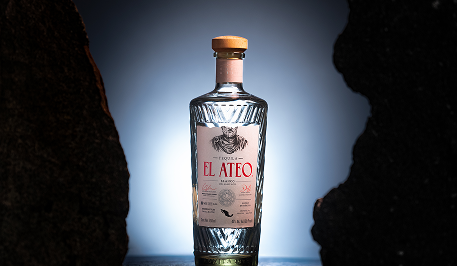
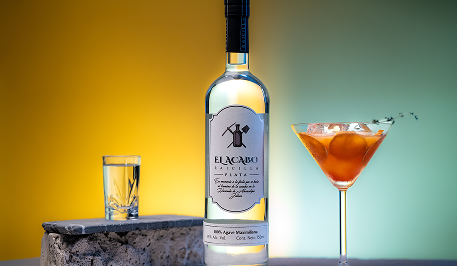
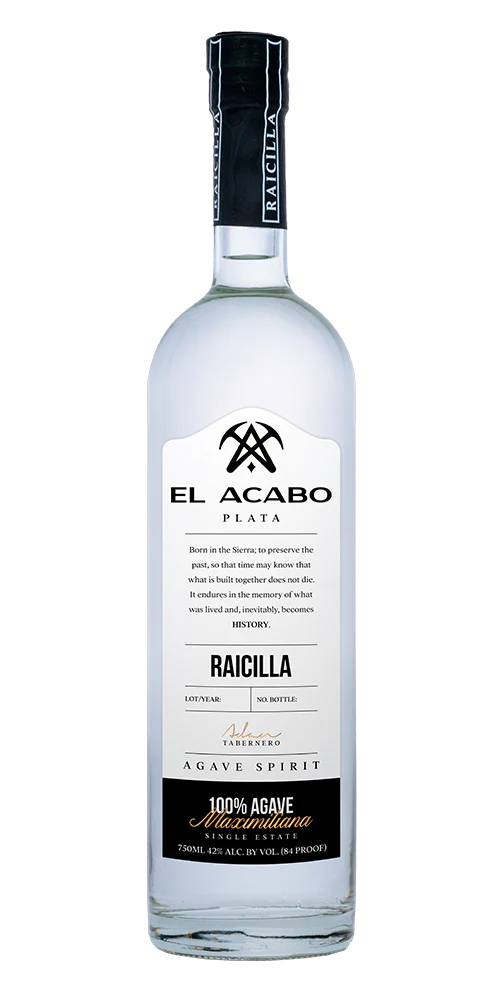
In El Acabo, judgment first appears in time.
Fausto does not speak about slowness as a decorative gesture, nor about process as a narrative device. He speaks about concrete decisions: preserving wood-fired distillation, maintaining spontaneous fermentations, and avoiding technical interventions that could accelerate production at the cost of changing the result. The question is not whether faster methods exist. It is what would be lost if they were adopted.
That kind of decision requires accepting a direct consequence: it takes longer. In a category where demand can push toward standardization, allowing things to follow their course requires more than conviction. It requires planning, patience, and a clear sense of what is being protected.
In his case, what is being protected is not an image of origin, but a working identity that remains alive in the liquid. Not accelerating means not emptying it out, not over-correcting, not replacing the pulse of the process with a version that may be more efficient, but less its own.
Fausto puts it this way: “This product exists as it does because we do not negotiate its essence: we respect the land, the time, and the processes that give it soul.”
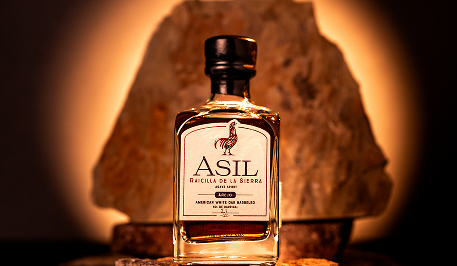
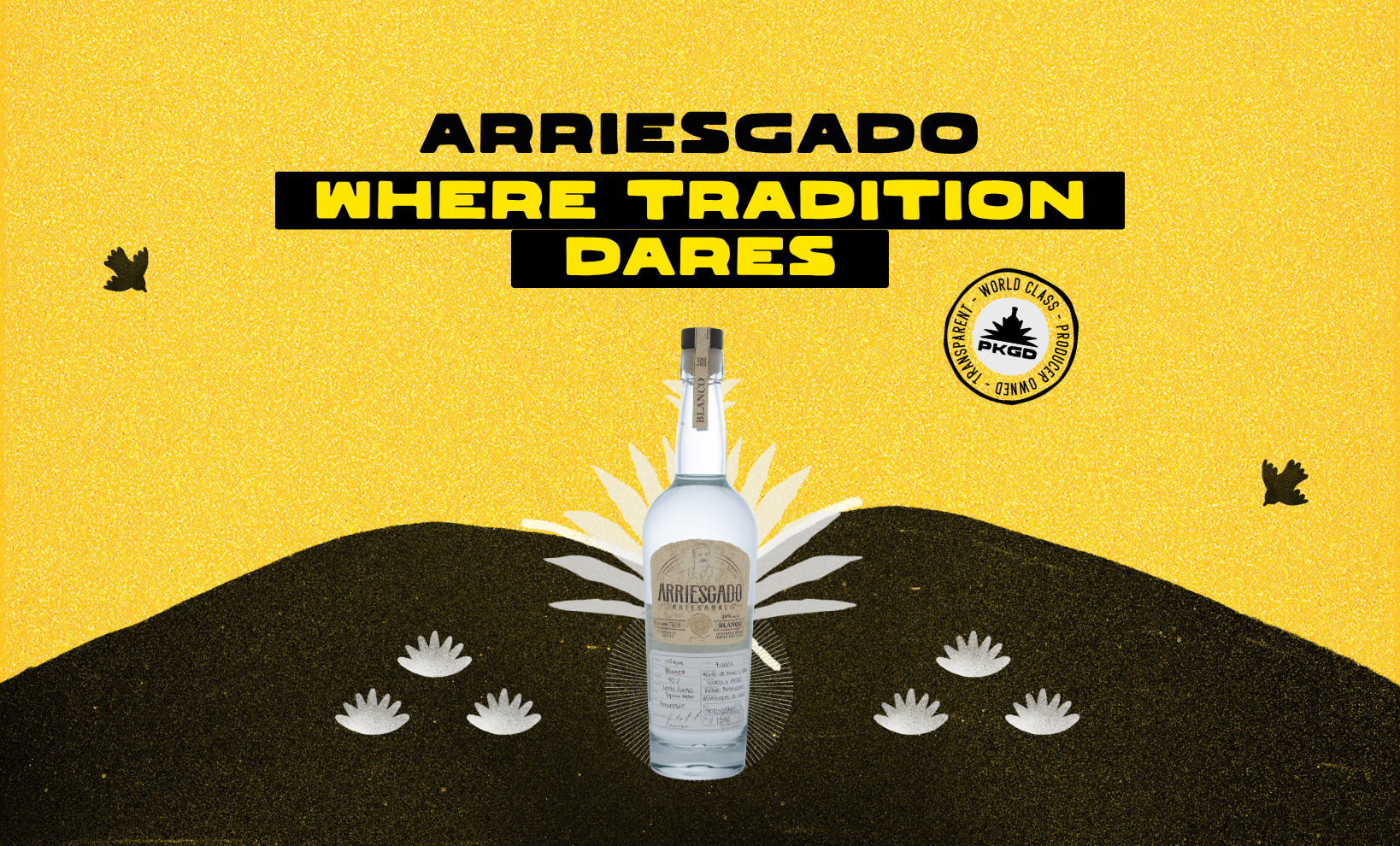
In Arriesgado, judgment becomes visible not only in method, but in the economic sacrifice that method requires.
Roberto maintains a manual process in stages that many brands would be willing to alter to increase volume, lower costs, or soften the less accommodating edges of the profile. In particular, he is unwilling to change the cooking, the milling, or the distillation. A central part of what distinguishes the product is decided there.
The consequence is direct: producing this way costs more. And when producing more would also mean selling more, maintaining small lots stops being an aesthetic preference and becomes a commercial decision with a real cost.
That matters because it makes legible something brand language often tries to soften: there are products whose character survives only if someone is willing to surrender efficiency. In Arriesgado, that sacrifice does not read as posture. It is the necessary condition for avoiding a standardized result or a diluted identity.
Roberto’s clearest line goes straight to the center of the argument: “We have given up selling more and sacrificed profit, because producing this way costs us more.”
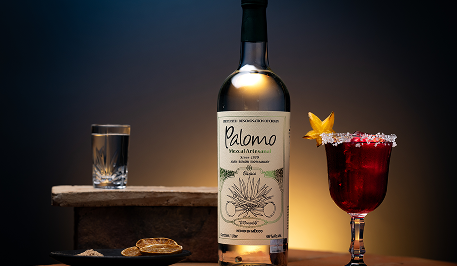
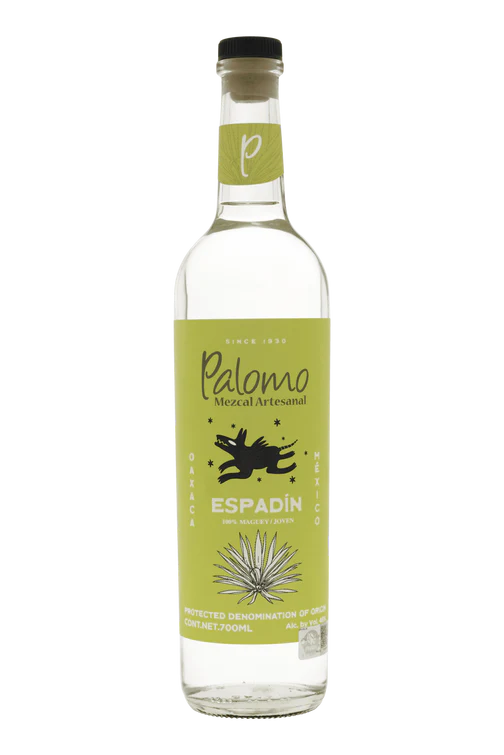
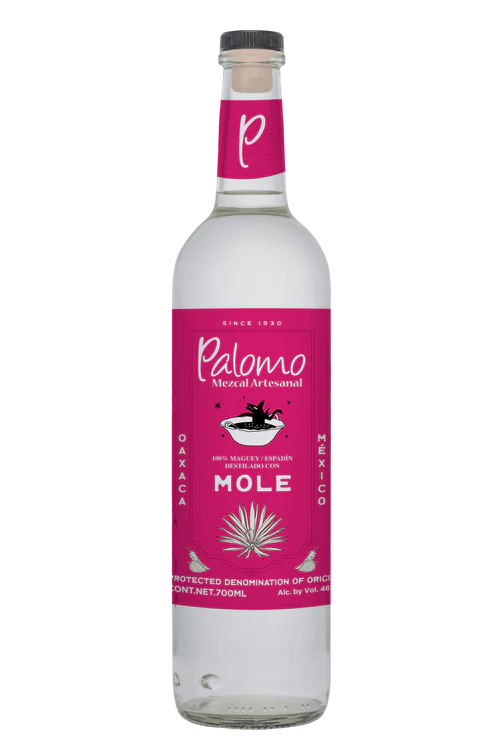
In Palomo, the conversation becomes more complex.
Carlos does not frame judgment as a total refusal of change. On the contrary, he recognizes that every market demands adjustments, that certain decisions can be adapted, and that innovation does not necessarily contradict origin. Presentation can change. Certain parameters can be refined. The offering can diversify. But that openness has a precise limit.
That limit appears when adaptation stops translating and begins concealing. When improving yield means adulterating. When competing means adding other alcohols, other sugars, additives, or devices that simulate what mezcal is not.
That is where Carlos draws a clear line. What is non-negotiable is not an empty slogan about tradition, but the material truth of the product: mature agave, respected processes, and the direct presence of the producer throughout the sensory process, from cooking through distillation. What is being protected, in the end, is not only a beverage, but a way of keeping mezcal tied to people, families, and towns.
Two of his statements condense that judgment with particular clarity: “What is non-negotiable, and never permissible, is doing something hidden.” And: “We protect mezcal remaining 100% agave and made by people, families, and towns.”
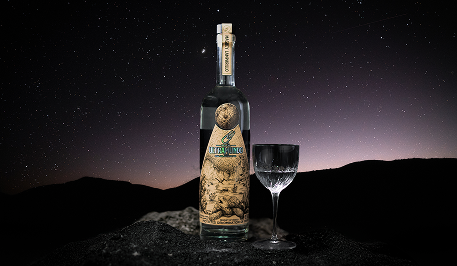
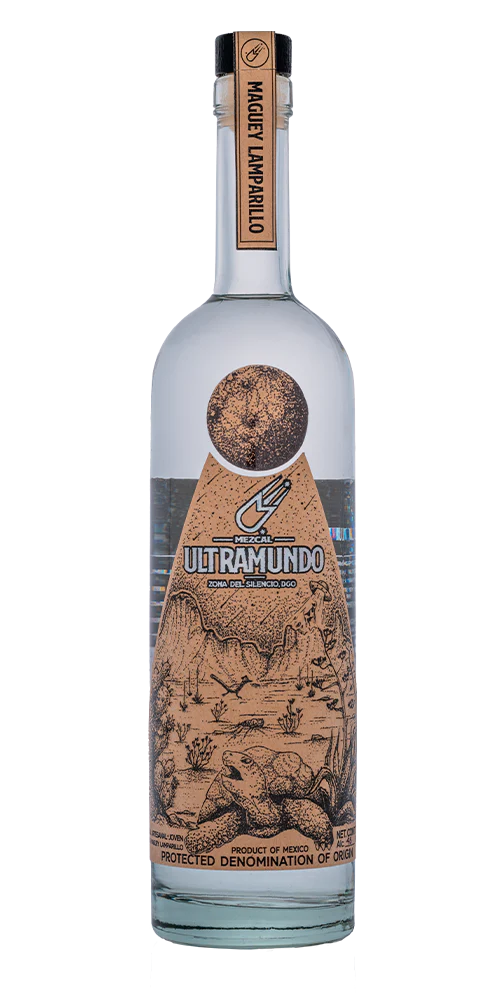
In Ultramundo, the argument expands.
Sergio does not describe a process frozen in place for its own sake. He leaves room for experimentation, learning, and technical evolution. What he refuses to give up is not stasis, but coherence: wood-fired cooking, natural fermentation, and the exclusion of anything other than agave or sotol from the distillate. From there, innovation is welcome only if it remains accountable to the product, the environment, and the sensory experience in the glass.
That choice comes with difficulty. Ultramundo’s production is inefficient by design in both process and yield, and nowhere is that tension more visible than in fermentation. In an extreme and unstable climate, natural fermentation allows only limited control. Each lot can behave differently. But that uncertainty is not treated as a flaw to engineer away. It is accepted as part of what allows the desert, the plant, and the season to remain present in the final spirit.
Here the argument moves beyond process alone. In Ultramundo, what is being protected is not only a way of making mezcal or sotol, but a relationship to the land that makes the product possible in the first place. The plants mature slowly in severe conditions. The ecosystem is not scenery. It is an active author of the spirit’s existence. To force efficiency through monoculture, stainless steel fermentation or distillation, or proof reduction would not simply change production. It would weaken the bond between the liquid and the place that shaped it.
Sergio also sharpens an important point: respect for tradition and respect for biodiversity do not always align neatly. At times they pull against one another. So the standard is not blind repetition. It is the continuous search for harmony among cultural continuity, environmental responsibility, and a sensory result worthy of the material. The process begins in the field, moves through an integrated chain of value, and arrives in the glass without pretending that origin can be separated from stewardship.
He puts it this way: “This product exists as it does because these plants survived the desert, and we learned how to preserve them and transform them into a beautiful distillate that delivers a unique experience to the person who drinks it.”
Taken together, these four cases do not prove a single aesthetic of origin. They prove something more important: that a producer’s judgment is revealed in what they choose to uphold when changing would be easier.
Sometimes that judgment takes the form of a process that is not accelerated. Sometimes it appears in a cost accepted so the result is not cheapened. Sometimes it becomes an explicit boundary against everything that falsifies the product in the name of the market. And sometimes it expands outward, making clear that a spirit cannot be separated from the land, ecological conditions, and long timelines that made it possible at all.
A spirit is not defined only by what it contains. It is also defined by what someone decided not to sacrifice so that it could exist as it does.
This article was structured with the assistance of artificial intelligence (ChatGPT). All content is based on human input and editorial oversight. For more details on how PKGD integrates AI responsibly, please refer to our AI Policy.
This article was structured with the assistance of artificial intelligence (ChatGPT). All content is based on human input and editorial oversight. For more details on how PKGD integrates AI responsibly, please refer to our AI Policy.
At PKGD, we continue investing in brand-led storytelling, creating work designed not only to perform, but to build long-term brand equity.

By accessing and using PKGD´s website, you agree to the cookie policy outlined in our privacy notice.
By accessing and using PKGD´s website, you agree to the cookie policy outlined in our privacy notice.





































Leave a reply
Lorem ipsum dolor sit amet, consectetur adipiscing elit. Suspendisse varius enim in eros elementum tristique. Duis cursus, mi quis viverra.
Lorem ipsum dolor sit amet, consectetur adipiscing elit. Suspendisse varius enim in eros elementum tristique. Duis cursus, mi quis viverra.